🤕 Pain in the head when chewing
A sharp or aching pain at the side of the head or the temple, often on one side, that starts or gets worse while you eat.
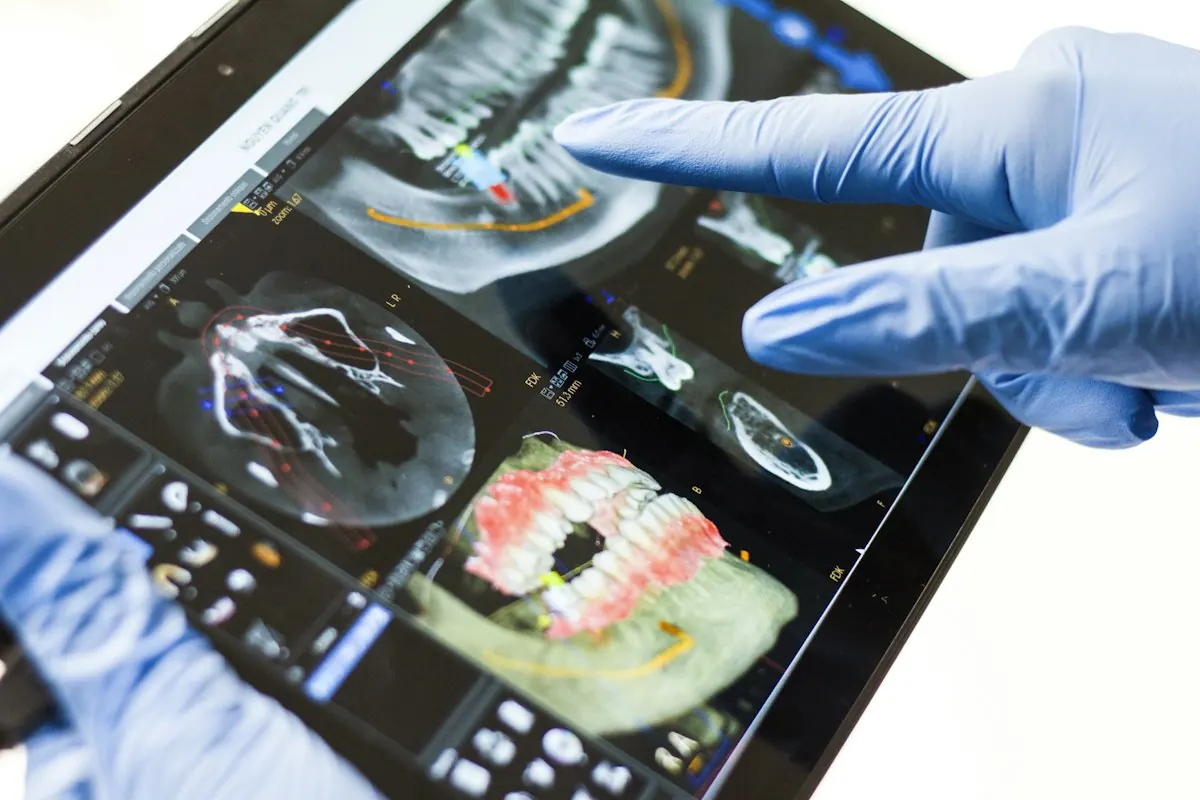
A sharp pain in the side of the head while eating, an ache in front of the ear, or a jaw that clicks or gets stuck: these often come from the jaw joint (TMJ) or the muscles around it, not from your head or ear. A dental check can usually find the cause.
Most people don’t know they have a jaw problem. They only know where it hurts. These are the things patients tell us:
A sharp or aching pain at the side of the head or the temple, often on one side, that starts or gets worse while you eat.
Pain in or just in front of the ear when chewing, yawning or opening wide, sometimes with a blocked or ringing feeling. The jaw joint sits right next to the ear.
A click, pop or grating sound when you open or close your mouth, on one side or both, with or without pain.
The jaw catches, locks, or won’t open fully, or it opens crooked to one side.
An aching jaw, face or teeth in the morning. Often a sign of clenching or grinding at night.
Pain that feels like a back tooth but nothing shows on the tooth itself, or teeth that feel tender all over.
“He took initiative to guide me for a treatment that was right for my situation.”
“He explained the procedure clearly and treated me with great care.”
“You can boldly visit the clinic as the treatment is painless.”
Short excerpts from public Google reviews, without names. Read all reviews on Google.
This isn’t a diagnosis, but it helps you decide whether to get your jaw checked.
Tick the boxes above.
Book a jaw checkThe temporomandibular joint is the hinge that connects your lower jaw to your skull, one on each side, just in front of your ears. A small disc cushions it, and strong muscles at your temples and cheeks move it every time you talk, chew or yawn. When the joint, the disc or those muscles are strained, the pain can spread to your head, ear, face and neck. That’s why it’s so often mistaken for a headache or an ear problem.
There’s often more than one cause, which is why a proper examination matters.
Grinding or clenching your teeth, often at night or under stress, overworks the jaw muscles and joint.
The cushioning disc slips forward, causing clicking. If it doesn’t slip back, the jaw can catch or lock.
Missing back teeth, a high filling or crown, or uneven chewing on one side can strain the joint.
An impacted or infected wisdom tooth can cause jaw and ear pain that feels like a joint problem.
Chewing gum, biting nails or pens, very hard food, opening very wide, or holding the phone with your shoulder.
A blow to the jaw, or wear and arthritis in the joint, can cause pain, grating and stiffness.
If your pain isn’t coming from your teeth or jaw, we’ll tell you honestly and point you to the right doctor.
Most jaw joint problems get better with simple, non-surgical care. Surgery is rarely needed.
When the pain started, what makes it worse, and your sleep, stress and chewing habits. Often the most useful clues.
We check how wide and how straight your jaw opens, feel the joint and muscles for tenderness, and listen for clicks.
Grinding wear, the bite, wisdom teeth and any hidden tooth problem, with a digital X-ray if needed.
Soft diet, warm or cold packs, gentle jaw exercises, and stopping habits like gum chewing. This often brings relief on its own.
A night guard (bite splint) for grinding, correcting a high filling or bite, treating a problem tooth, and short-term medicines if needed.
For joint damage, arthritis or pain that doesn’t settle, we refer you to a physiotherapist, an oral & maxillofacial surgeon or a physician.
Jaw joint pain is easy to miss, because patients come in with a headache, an earache or a “toothache”. In 26 years of practice on Hutchins Road, Dr. Farooq (BDS, FAGE) has learned to recognise when the jaw, the bite or a hidden tooth is behind pain that seems to be somewhere else.
You’ll get a clear explanation of what’s causing your pain and the simplest way to treat it. If you need another specialist, we’ll tell you that too.
More about Dr. FarooqIf the pain lasts more than a week or two, keeps coming back, or your jaw locks, get it examined.
Send us a WhatsApp message describing where it hurts and when. We’ll tell you whether to come in.
WhatsApp us what’s bothering you (a photo or old X-ray helps), or call 099455 39225. Calls are answered 9 am–9 pm, every day.
We’ll offer a slot that suits you (Mon–Sat, 10 am–2 pm or 5 pm–8:30 pm) and tell you if anything is needed beforehand.
Ground Floor, 42 Hutchins Road, Frazer Town / Cooke Town. Bring old X-rays or reports and a list of any medicines you take.
The main chewing muscle runs up the side of your head to the temple. When that muscle or the jaw joint is strained, chewing can trigger pain that feels like a headache, often on one side. A tooth problem or a high filling can also cause it. An examination tells us which.
The jaw joint sits just in front of the ear, so jaw problems often feel like earache. If there’s no discharge, fever or hearing loss and the ear looks healthy, the jaw is a common cause. We check both, and refer you to an ENT doctor if the ear is the problem.
Painless clicking is common and often needs no treatment. Get it checked if the clicking comes with pain, your jaw catches or locks, or it’s getting harder to open your mouth.
Yes. An impacted or infected wisdom tooth can cause pain in the jaw, ear and side of the head, and limit how wide you can open. See our wisdom tooth guide.
Many cases settle with self-care and by removing the trigger, such as grinding or gum chewing. If pain keeps coming back or your jaw locks, treatment like a night guard or fixing the bite usually helps.
Very rarely. Most people improve with simple care. If a specialist procedure is ever needed, we’ll refer you.
We don’t publish price lists. A jaw consultation is a modest fee, and the consultation is free if you go ahead with treatment. Ask us on WhatsApp.
Ground Floor, 42 Hutchins Road, Frazer Town / Cooke Town. Mon–Sat, 10 am–2 pm and 5 pm–8:30 pm. Calls answered 9 am–9 pm.