Fully erupted
Upright and fully through the gum. If it’s decayed or can’t be cleaned, it can usually be removed like any other back tooth.
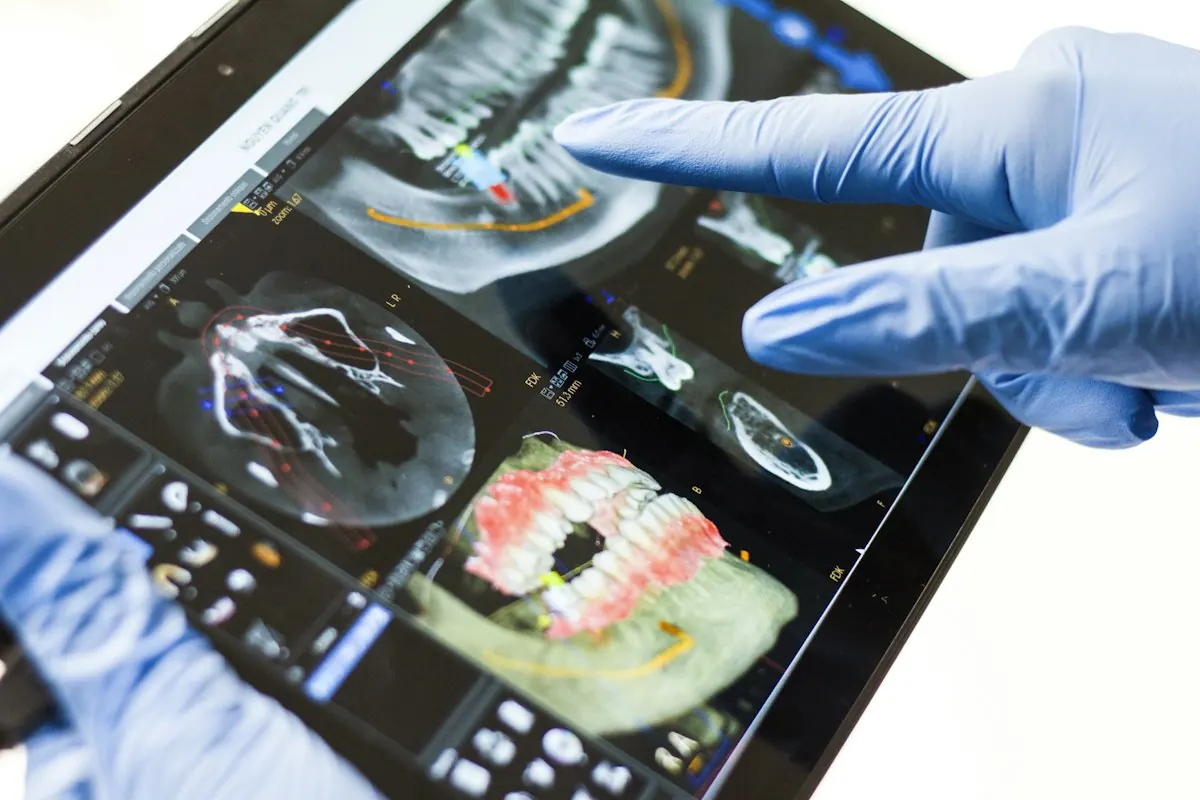
Most wisdom teeth come out in one short, planned visit. Some are tilted, buried or sitting close to a nerve, and that’s where experience decides whether you need a simple procedure or a major surgery.
Typical ranges. Your own X-ray and examination decide the plan, and we explain it before anything starts.
“You can boldly visit the clinic as the treatment is painless.”
“He took initiative to guide me for a treatment that was right for my situation.”
“I was very scared… The treatment was painless and felt completely effortless.”
Short excerpts from public Google reviews, without names. Read all reviews on Google.
Wisdom teeth (third molars) usually appear between the ages of 17 and 25. By then the jaw often has little space behind the second molar, so the tooth comes in tilted, stays half under the gum, or doesn’t come through at all. Dentists call that an impacted wisdom tooth.
Not every wisdom tooth has to come out. If it has come in straight, is healthy and you can clean it, we’ll tell you to leave it alone.
These are the six positions we see most often. In each sketch, the tooth on the left is your second molar. The dotted gold line is the nerve that runs through the lower jaw.
Upright and fully through the gum. If it’s decayed or can’t be cleaned, it can usually be removed like any other back tooth.
Upright, but still covered by gum. It often traps food and gets infected. Removal usually means opening the gum a little.
Leaning into the second molar. It can push on that tooth and cause decay where the two meet. Removal is often surgical.
Lying on its side against the molar’s roots. It usually has to be divided into smaller pieces and removed in sections.
Leaning away towards the back of the jaw. The angle can make it awkward to lift out, so planning matters.
Fully buried in bone, sometimes close to the nerve. If it causes no problems, it may be safer to monitor than to remove.
The aim is always the gentlest route that’s safe for your particular tooth. That isn’t always the first one people are offered.
After numbing the area, the tooth is gently loosened in its socket and lifted out. There are usually no cuts and often no stitches.
A small opening is made in the gum. Sometimes a little bone is removed, or the tooth is divided so it comes out in pieces with less force. A few stitches close the area.
An examination and a digital X-ray show the tooth’s angle, depth and roots, and how close it is to the nerve or, for upper teeth, the sinus.
We show you the X-ray and explain what the extraction involves, how long it should take and what recovery looks like, before you decide anything.
The tooth comes out under local anaesthetic. You go home with written aftercare instructions and a number to call.
“Several dentists had told him it needed a major operation. In the end, he didn’t need one.”
A patient came to us with a difficult wisdom tooth. He had already seen several dentists, including very well-qualified specialists, and all had advised a major surgical procedure, with the cost and recovery that comes with it.
After examining him and studying the X-ray, Dr. Farooq saw a different way to approach the tooth. He used a simple instrument in an unconventional way, guided by 26 years of handling teeth like this.
The tooth came out in a simple, effective procedure. No major surgery was needed. The patient was overjoyed to have avoided the operation and to have saved a significant amount of money.
Not every wisdom tooth can be handled this way. Some genuinely need surgery, and we’ll tell you honestly when yours does. But if you’ve been told you need a major operation, a second opinion costs you very little and may save you a lot.
Shared with the patient’s details removed. Outcomes depend on each case.
Dr. Farooq (BDS, FAGE) has led Zenith Dental Care on Hutchins Road for 26 years. Over that time he has removed wisdom teeth in almost every position and condition, so he can usually tell from the X-ray which teeth need surgery and which don’t.
He works with digital RVG X-rays and advanced imaging in the clinic, and he explains exactly what he sees before you decide. Nine of our Google reviews mention extractions specifically.
More about Dr. FarooqMost extractions heal without problems. These are the complications every patient should know about. We go through the ones that apply to you before we start.
WhatsApp us what’s bothering you (a photo or old X-ray helps), or call 099455 39225. Calls are answered 9 am–9 pm, every day.
We’ll offer a slot that suits you (Mon–Sat, 10 am–2 pm or 5 pm–8:30 pm) and tell you if anything is needed beforehand.
Ground Floor, 42 Hutchins Road, Frazer Town / Cooke Town. Bring old X-rays or reports and a list of any medicines you take.
The area is fully numbed, so you should feel pressure rather than pain during the extraction. Soreness for a few days afterwards is normal and is managed with the medicines we prescribe.
No. A healthy wisdom tooth that has come in straight and can be cleaned can stay. We recommend removal when a tooth causes infections, pain, decay in the neighbouring tooth, or is likely to cause problems.
Yes, it’s worth it. Send us your X-ray on WhatsApp or come in. Sometimes surgery really is the right answer, and we’ll say so. Sometimes, as in the case above, there’s a simpler way.
After a simple extraction, many people are back at work the next day. After a surgical extraction, plan for two to four days of taking it easy.
Sometimes. It depends on how difficult each tooth is and on your health. Often we remove the teeth on one side first, so you can still chew comfortably on the other.
We don’t publish price lists, because a simple and a complex extraction are very different pieces of work. You’ll get a clear quote after your X-ray, and your consultation is free when you go ahead with treatment.
Ground Floor, 42 Hutchins Road, Frazer Town / Cooke Town. Mon–Sat, 10 am–2 pm and 5 pm–8:30 pm. Calls answered 9 am–9 pm.