🕳️ A gap after an extraction
A tooth was removed months or years ago and the space was never filled.
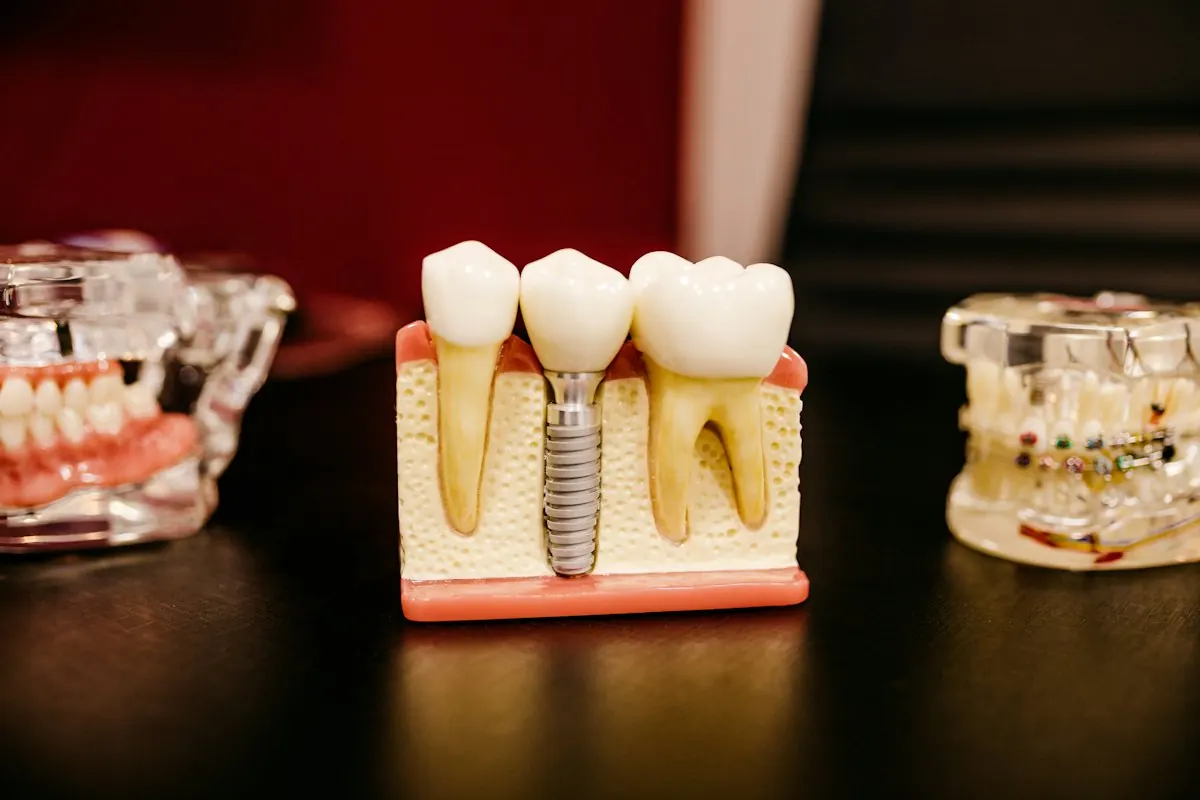
A gap after a tooth was removed, dentures that move when you eat or talk, or chewing only on one side: you don’t have to live with it. Today a missing tooth can be replaced with a fixed tooth that doesn’t come out. Dr. Farooq will show you your options and give you a written quote before anything starts.
A tooth was removed months or years ago and the space was never filled.
Your dentures move when you eat or speak, rub your gums, or need paste to stay in.
You avoid hard food, or chew only on one side because a back tooth is missing.
Teeth have become loose, or have fallen out because of gum disease or decay.
Neighbouring teeth have tilted into the gap and food gets stuck there.
A missing front tooth makes you avoid smiling, photos or meetings.
“He explained the procedure clearly and treated me with great care.”
“He took initiative to guide me for a treatment that was right for my situation.”
“Visiting Dr. Farooq since I was 5, never felt the need to switch.”
Short excerpts from public Google reviews, without names. Read all reviews on Google.
Even if a tooth has been missing for years, it can usually still be replaced. An X-ray shows how much bone you have and which option suits you.
Dr. Farooq will explain which suits your mouth, your health and your budget. You decide with the full picture.
A small titanium post placed in the jaw bone, with a crown fixed on top. It doesn’t come out, doesn’t touch the neighbouring teeth and helps keep the bone from shrinking. Often called “teeth planting”.
A false tooth held by crowns on the teeth either side. Fixed in place, but the neighbouring teeth have to be trimmed for the crowns.
Removable false teeth. The simplest option, but they can move, need taking out at night, and don’t stop bone loss.
Dentures loosen over time because the gums and bone underneath slowly shrink once teeth are gone. That’s why even well-made dentures start to slip, rub and need more paste each year.
When dentures keep moving, a few implants can hold them firmly in place (implant-supported dentures), or single implants can replace the missing teeth altogether.
Ask about loose denturesDr. Farooq (BDS, FAGE) holds a professional diploma in evidence-based and clinical implant dentistry. You get direct access to him, an honest view of whether you need an implant at all, and a written plan before you start.
The cost depends on how many teeth are missing, the bone you have and the option you choose, so we don’t publish price lists. After an examination and X-ray you get a written plan with the full cost, so there are no surprises later. The consultation is free if you go ahead with treatment.
WhatsApp us what’s bothering you (a photo or old X-ray helps), or call 099455 39225. Calls are answered 9 am–9 pm, every day.
We’ll offer a slot that suits you (Mon–Sat, 10 am–2 pm or 5 pm–8:30 pm) and tell you if anything is needed beforehand.
Ground Floor, 42 Hutchins Road, Frazer Town / Cooke Town. Bring old X-rays or reports and a list of any medicines you take.
An implant (a fixed tooth on a titanium post), a bridge fixed to the neighbouring teeth, or a removable denture. An implant is the closest to a natural tooth, but the right choice depends on your bone, gums, health and budget. We’ll explain each after an examination.
After teeth are lost, the gum and bone underneath slowly shrink, so dentures that once fitted well start to move. Weight loss and wear also play a part. Implants can hold dentures firmly so they no longer slip.
Often, yes. Depending on your bone, a few implants can anchor the denture so it clicks into place, or implants can replace the teeth with fixed ones. A check-up and X-ray show what’s possible.
In adults the most common cause is gum disease, which destroys the bone holding the teeth. Deep decay and old injuries are other causes. If teeth are getting loose, see a dentist soon: treating the gums can save teeth, and lost ones can be replaced. See our gum disease guide.
Usually not. If the bone has shrunk, there are ways to work around it. An X-ray will show how much bone there is and which option suits you.
Age itself is rarely the limit. General health, gum health and bone matter more. Many older patients choose implants precisely because dentures have become uncomfortable.
The area is numbed, so you feel pressure rather than pain during treatment. Mild soreness for a few days afterwards is common and settles with ordinary painkillers.
It depends on the option and your mouth. We don’t publish price lists. You’ll get a written quote before treatment, and the consultation is free if you go ahead.
Ground Floor, 42 Hutchins Road, Frazer Town / Cooke Town. Mon–Sat, 10 am–2 pm and 5 pm–8:30 pm. Calls answered 9 am–9 pm.